


Effects of a Volatile Organic Compound Filter on Breath Profiles Measured by Secondary Electrospray High-Resolution Mass Spectrometry
Ronja Weber, Jérôme Kaeslin, Sophia Moeller, Nathan Perkins, Srdjan Micic, and Alexander Moeller.
Environmental volatile organic compounds (VOCs) from the ambient air potentially influence on-line breath analysis measurements by secondary electrospray ionization high-resolution mass spectrometry (SESI-HRMS). The aim of this study was to investigate how inhaling through a VOC filter affects the detected breath profiles and whether it is feasible to integrate such filters into routine measurements..

Real-Time Chemical Characterization of Aerosols by Secondary Electrospray Ionization Coupled with High-Resolution Mass Spectrometry
T. Zivkovic Semren*, S. Majeed, M. Fatarova, C. Laszlo, C. Pak, S. Steiner, G. Vidal, A. Kuczaj, A. Mazurov, M. C. Peitsch, N. V. Ivanov, J. Hoeng, P. A. Guy
Inhalation as a route for administering drugs and dietary supplements has garnered significant attention over the last decade. We performed real-time analysis of aerosols using secondary electrospray ionization (SESI) technology interfaced with high-resolution mass spectrometry (HRMS)

Asthma in one breath: metabolic signatures for allergic asthma in children by real-time breath analysis
R Weber, B Streckenbach, J Kaeslin, L Welti, D Inci, N Perkins, R Zenobi, S Micic, A Möller.
We hypothesized that the breath of children with allergic asthma contains a unique signature of disease specific metabolites. Using secondary electrospray ionization high-resolution mass spectrometry (SESI-HRMS), we aimed to identify relevant VOCs to assess underlying interconnections between biomarkers belonging to common metabolic pathways in the pathophysiology of asthma.

Real-time measurements of product compounds formed through the reaction of ozone with breath exhaled VOCs
Xin Xu, Hongwei Pang, Chao Liu, Kangyi Wang, Gwendal Loisel, Lei Li, Sasho Gligorovski, Xue Li
Human presence can affect indoor air quality because of secondary organic compounds formed upon reactions between gaseous oxidant species, e.g., ozone (O3), hydroxyl radicals (OH), and chemical compounds from skin, exhaled breath, hair and clothes. We assess the gas-phase product compounds generated by reactions of gaseous O3 with volatile organic compounds (VOCs) from exhaled human breath…

Severe Obstructive Sleep Apnea Disrupts Vigilance-State-Dependent Metabolism
Felix Schmidt, Nora Nowak, Patrick Baumgartner, Thomas Gaisl, Stefan Malesevic, Bettina Streckenbach, Noriane A. Sievi, Esther I. Schwarz, Renato Zenobi, Steven A. Brown, and Malcolm Kohler.
The direct pathophysiological effects of obstructive sleep apnea (OSA) have been well described. However, the systemic and metabolic consequences of OSA are less well understood.

The Effect of Human Occupancy on Indoor Air Quality through Real-Time Measurements of Key Pollutants
Huifan Deng, Xin Xu, Kangyi Wang, Jinli Xu, Gwendal Loisel, Yiqun Wang, Hongwei Pang, Pan Li, Zebin Mai, Shichao Yan, Xue Li,Sasho Gligorovski
The primarily emitted compounds by human presence, e.g., skin and volatile organic compounds (VOCs) in breath, can react with typical indoor air oxidants, ozone (O3), and hydroxyl radicals (OH), leading to secondary organic compounds…

Rapid detection of Staphylococcus aureus and Streptococcus pneumoniae by real-time analysis of volatile metabolites
A. Gómez-Mejia, K. Arnold, J. Bär, K. Dev Singh, T. C. Scheier, S. D. Brugger, A. S. Zinkernagel, P. Sinues
Early detection of pathogenic bacteria is needed for rapid diagnostics allowing adequate and timely treatment of infections.

Identification of Exhaled Metabolites in Children with Cystic Fibrosis
Ronja Weber, Nathan Perkins, Tobias Bruderer, Srdjan Micic and Alexander Moeller.
The early detection of inflammation and infection is important to prevent irreversible lung damage in cystic fibrosis. Novel and non-invasive monitoring tools would be of high benefit for the quality of life of patients.

Monitoring Drug Pharmacokinetics
F. Schmidt ; M. Osswald ; R. Zenobi ; M. Kohler
Monitoring of drug pharmacokinetics is used in personalized therapy, therapeutic drug monitoring (TDM), toxicology assessments, doping controls and clinical drug development. Drugs are predominantly measured in plasma, serum or urine. Monitoring of volatile organic compounds (VOCs) in breath has so far not received much attention, but nevertheless it has many advantages over conventional approaches

Daytime SO2 chemistry on ubiquitous urban surfaces as a source of organic sulfur compounds in ambient air
Huifan Deng, Pascale S. J. Lakey, Yiqun Wang, Pan Li, Jinli Xu, Hongwei Pang, Jiangping Liu, Xin Xu, Xue Li, Xinming Wang, Yuzhong Zhang, Manabu Shiraiwa, and Sasho Gligorovski
The reactions of sulfur dioxide (SO2) with surface-bound compounds on atmospheric aerosols lead to the formation of organic sulfur (OS) compounds, thereby affecting the air quality and climate. Here, we show that the heterogeneous reaction of SO2 with authentic urban grime under near-ultraviolet sunlight irradiation leads to a large suite of various organic compounds including OS released in the gas phase…
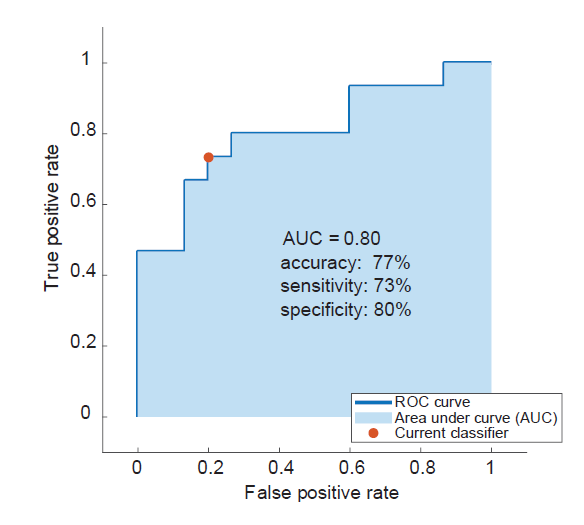
Validating Discriminative Signatures for Obstructive Sleep Apnea in Exhaled Breath
B. Streckenbach, M. Osswald, S. Malesevic, R. Zenobi, and M. Kohler
Chemical analysis of exhaled breath have suggested the existence of an OSA-specific metabolic signature. Here, we validated this diagnostic approach and the proposed marker compounds, as well as their potential to reliably diagnose OSA.

How Soft Is Secondary Electrospray Ionization?
Jérôme Kaeslin, Cedric Wüthrich, Stamatios Giannoukos, and Renato Zenobi
Secondary electrospray ionization (SESI) is a soft ionization method, which is important to avoid interference from in-source fragments and to simplify compound annotation. In this work, it is shown that SESI is softer than electrospray ionization (ESI), and therefore, SESI indeed qualifies as a soft ionization technique. However…

Data Set accompanying "How soft is secondary electrospray ionization?"
Jérôme Kaeslin, Cedric Wüthrich, Stamatios Giannoukos, Renato Zenobi
It is a set of accompanying files for the publication "How soft is secondary electrospray ionization?".

The Human Skin Volatolome: A Systematic Review of Untargeted Mass Spectrometry Analysis
A. Gómez-Mejia, K. Arnold, J. Bär, K. Dev Singh, T. C. Scheier, S. D. Brugger, A. S. Zinkernagel, P. Sinues
Early detection of pathogenic bacteria is needed for rapid diagnostics allowing adequate and timely treatment of infections.

Breath response following a nutritional challenge monitored by secondary electrospray ionization high-resolution mass spectrometry
C. Wüthrich, M.de Figueiredo, K. J. Burton-Pimentel, G. Vergères, F. Wahl, R. Zenobi and S. Giannoukos
For the first time, this study demonstrates the application of SESI-HRMS in the field of nutritional science using a standardized nutritional intervention, consisting of a high-energy shake. Tentative compounds include fatty acids, amino acids, and amino acid derivatives, some of them likely derived from nutrients by the gut microbiome, as well as organic acids from the Krebs cycle. Time-series clustering showed an overlap of observed kinetic trends with those reported previously in blood plasma.

In vivo detection of metabolic 2H-incorporation upon ingestion of 2H2O
Kim Arnold, Xing Chen, Hui Zhang, Kapil Dev Singh, Zhihong Yin, Yao Yao, Tiangang Luan, Pablo Sinues, and Xue Li
Secondary electrospray ionization-high resolution mass spectrometry allows monitoring in vivo 2H-incorporation of metabolites in a non-invasive and real-time setup and opens new opportunities to use 2H tracing to extend current metabolic studies, especially those with a focus on anaerobic glycolysis, lysine methylation and gut microbiome via monitoring of short-chain fatty acids.

Detection of N-phenylpropanamide vapor from fentanyl materials by secondary electrospray ionization-ion mobility spectrometry (SESI-IMS)
Charles D.Smith, Ashley C.Fulton, Mark Romanczyk, Braden C. Giordano, Christopher J. Katilie, Lauryn E. DeGreeffe
Determination of fentanyl vapor signature enables the identification of target analytes for the indirect detection of the parent opioid without direct sample handling.

Seeing the smell of garlic: Detection of gas phase volatiles from crushedgarlic (Allium sativum), onion (Allium cepa), ramsons (Allium ursinum) andhuman garlic breath using SESI-Orbitrap MS
Hendrik G. Mengers, Christina Schier, Martin Zimmermann, Martin C. H. Gruhlke, Eric Block, Lars M. Blank*, Alan J. Slusarenko
Using SESI-Orbitrap MS, we measured gas phase concentrations of allicin evaporating from a pure solution. The SESI-Orbitrap MS was used to follow the known chemistry of alliin, isoallin and methiin conversion in garlic, onion and ramsons. Allicin and its metabolites were also measured in human breath after garlic consumption. These results demonstrate the utility of SESI-Orbitrap MS for analysis of sulfur-containing volatiles from plants and for capturing volatilomes of foodstuffs in general.

Using off‑gas for insights through online monitoring of ethanol and baker’s yeast volatilome using SESI‑OrbitrapMS
Hendrik G. Mengers, Martin Zimmermann & Lars M. Blank
We use secondary electrospray ionisation high-resolution Orbitrap mass spectrometry (SESI-Orbitrap MS) to monitor the complete yeast volatilome every 2.3 s. Over 200 metabolites were identified during growth in shake flasks and bioreactor cultivations, all with their unique intensity profile. Special attention was paid to ethanol as biotech largest product and to acetaldehyde as an example of a low-abundance but highly volatile metabolite. Volatilome shifts are visible, e.g. after glucose depletion, fatty acids are converted to ethyl esters in a detoxification mechanism after stopped fatty acid biosynthesis. This work showcases the SESI-Orbitrap MS system for tracking microbial physiology without the need for sampling and for time-resolved discoveries during metabolic transitions.

Dataset for Non-invasive monitoring of microbiota and host metabolism using SESI-MS
Wetter Slack, Emma (ETH Zurich)
Dataset used in Non-invasive monitoring of microbiota and host metabolism using secondary electrospray ionization.