


Analyses of short-chain fatty acids and exhaled breath volatiles in dietary intervention trials for metabolic diseases
Jisun HJ Lee, Jiangjiang Zhu
The analysis of exhaled breath (breathomics) has gained attention as a useful technique to measure the human VOC profile altered as a result of dietary interventions. In this mini-review, we examined recent clinical trials that performed promising dietary interventions, SCFAs analysis in plasma/feces, and VOC profile analysis in exhaling breath to understand the relationship between dietary intervention and metabolic health.

Circadian Metabolomics from Breath
Steven A. Brown, Pablo Sinues
Metabolites like melatonin are essential in determining circadian phase. In the recent years, comprehensive metabolome analyses have unveiled entire panels of small biomolecules fluctuating in a circadian fashion, thus enabling a more precise determination of inner time and understanding of how circadian clock operates at the molecular level. Emerging analytical techniques allowing for the determination of exhaled metabolites in breath show promise to gain further insights noninvasively and in vivo into circadian metabolism.

Volatile organic compound breath signatures of children with cystic fibrosis by real-time SESI-HRMS
Ronja Weber, Naemi Haas, Astghik Baghdasaryan, Tobias Bruderer, Demet Inci, Srdjan Micic, Nathan Perkins, Renate Spinas, Renato Zenobi, Alexander Moeller
Early pulmonary infection and inflammation result in irreversible lung damage and are major contributors to cystic fibrosis (CF)-related morbidity. An easy to apply and noninvasive assessment for the timely detection of disease-associated complications would be of high value. We aimed to detect volatile organic compound (VOC) breath signatures of children with CF by real-time secondary electrospray ionisation high-resolution mass spectrometry (SESI-HRMS).
A total of 101 children, aged 4–18 years (CF=52; healthy controls=49) and comparable for sex, body mass index and lung function were included in this prospective cross-sectional study. Exhaled air was analysed by a SESI-source linked to a high-resolution time-of-flight mass spectrometer. Mass spectra ranging from m/z 50 to 500 were recorded.
Out of 3468 m/z features, 171 were significantly different in children with CF (false discovery rate adjusted p-value of 0.05). The predictive ability (CF versus healthy) was assessed by using a support-vector machine classifier and showed an average accuracy (repeated cross-validation) of 72.1% (sensitivity of 77.2% and specificity of 67.7%).
This is the first study to assess entire breath profiles of children with SESI-HRMS and to extract sets of VOCs that are associated with CF. We have detected a large set of exhaled molecules that are potentially related to CF, indicating that the molecular breath of children with CF is diverse and informative.
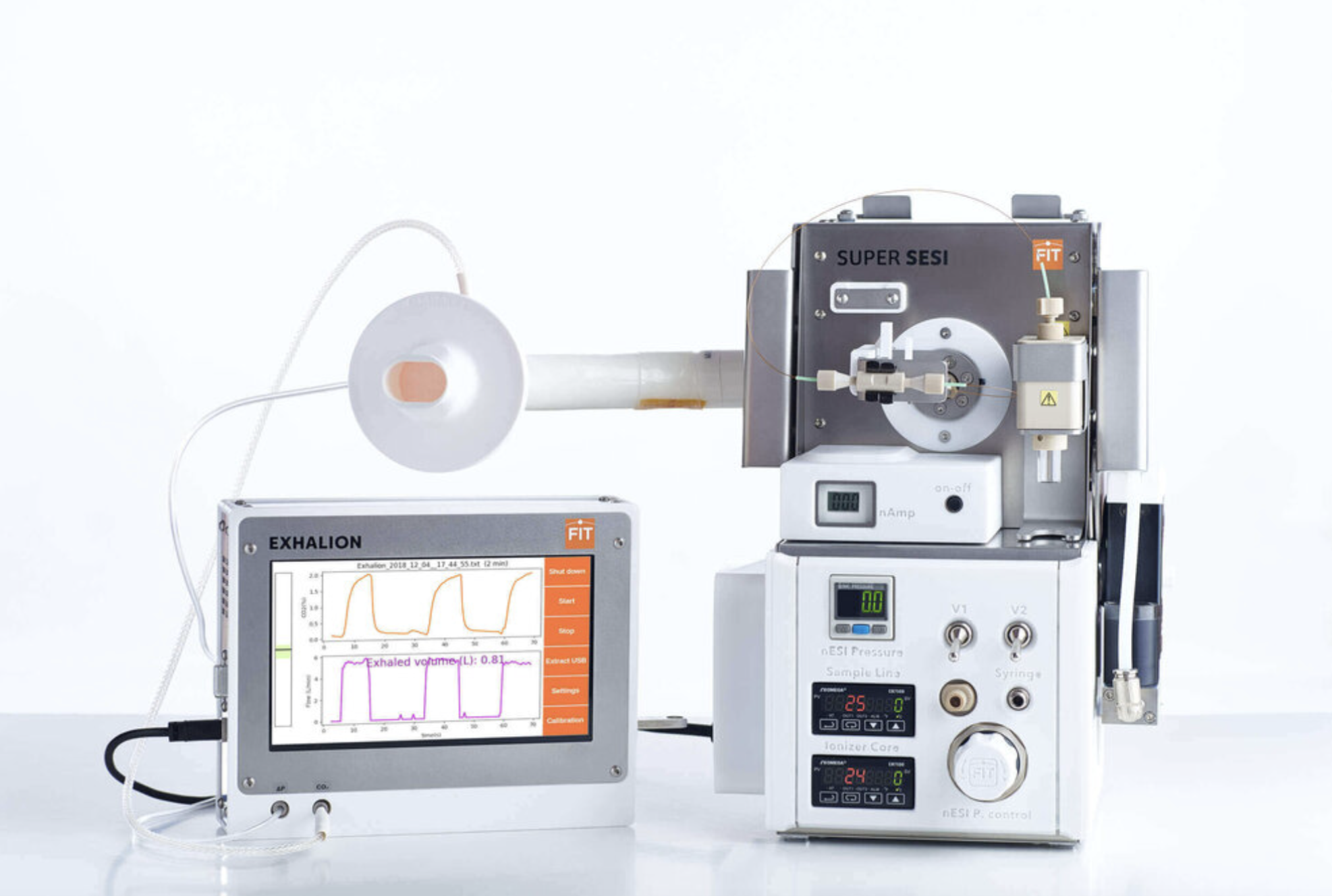
Identification of disease-specific molecular breath profiles in patients with allergic asthma
Ronja Weber, Srdjan Micic, Bettina Streckenbach, Lara Welti, Tobias Bruderer, Nathan Perkins, Demet Inci, Jakob Usemann, Alexander Möller
The diagnosis of asthma in children is still a clinical challenge. Breath-analysis has the potential to overcome this challenge. Our goal is to show that secondary electrospray ionization high-resolution mass-spectrometry (SESI-HRMS) can be used to detect asthma-specific metabolites in exhaled breath.
We are conducting an exploratory observational study comparing the molecular composition of exhaled breath from school children (5-18 years) with allergic asthma (confirmed by objective tests) to healthy controls. Patients are taken off their asthma medication two weeks prior to breath measurements. Breath analysis is performed on an AB SCIEX TripleTOF 5600+ HRMS coupled to a Super SESI ion source, detecting m/z features between 50 and 500 Da (mass accuracy <1ppm). A combination of data extraction and machine learning models is used to isolate the most discriminative features and assess the predictive power of breath profiles.
We acquired data from 47 children (21 with allergic asthma, 26 healthy controls). In our preliminary data analysis, we identified 193 m/z features which differed significantly between the two groups (adjusted p value < 0.05), which showed an average predictive power (asthma vs. healthy) of 78.7% (leave-one-out cross-validation with Random Forests algorithm). We could allocate molecular formulas to most significant m/z peaks. Compound identification is currently ongoing but some of the compounds have previously been reported in a biological context.
For the first time we identified exhaled molecules that differ between children with allergic asthma and healthy controls by real-time SESI-HRMS. Such a discovery has the potential to improve the early diagnosis of asthma.

Optimizing Secondary Electrospray Ionization High-Resolution Mass Spectrometry (SESI-HRMS) for the Analysis of Volatile Fatty Acids from Gut Microbiome
Jisun H. J. Lee and Jiangjiang Zhu
Gut microbiota plays essential roles in maintaining gut homeostasis. The composition of gut microbes and their metabolites are altered in response to diet and remedial agents such as antibiotics. However, little is known about the effect of antibiotics on the gut microbiota and their volatile metabolites. In this study, we evaluated the impact of a moderate level of ampicillin treatment on volatile fatty acids (VFAs) of gut microbial cultures using an optimized real-time secondary electrospray ionization coupled with high-resolution mass spectrometry (SESI-HRMS).

Bridging Targeted and Untargeted Mass Spectrometry-Based Metabolomics via Hybrid Approaches
Li Chen, Fanyi Zhong and Jiangjiang Zhu
This mini-review aims to discuss the development and applications of mass spectrometry (MS)-based hybrid approaches in metabolomics.

Detection of VOCs with Secondary Electrospray Ionization and Proton Transfer Reaction High-Resolution Mass Spec.: A Feature Comparison
Tobias Bruderer, Martin Thomas Gaugg, Luca Cappellin, Felipe Lopez-Hilfiker, Manuel A. Hutterli, Nathan Perkins, Renato Zenobi, and Alexander Moeller.
The analysis of volatiles is of high relevance for a wide range of applications from environmental air sampling, security screening to potential medical applications.

Real-time breath analysis of exhaled compounds upon peppermint oil ingestion by secondary electrospray ionization-high resolution mass spectrometry: technical aspects
Amanda Gisler, Jiayi Lan, Kapil Dev Singh Jakob Usemann, Urs Frey, Renato Zenobi and Pablo Sinues.
Breath analysis by secondary electrospray ionization high-resolution mass spectrometry (SESI-HRMS) has potential for clinical diagnosis and drug monitoring…
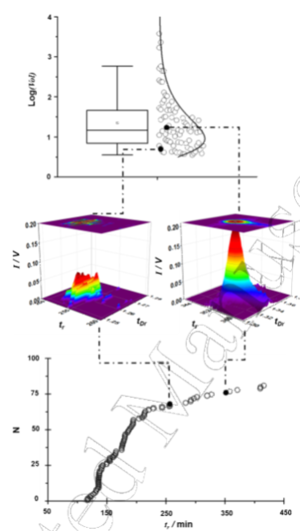
A benchmarking protocol for breath analysis: the peppermint experiment
Mr Ben Henderson, Dr Dorota M Ruszkiewicz, Mr Maxim Wilkinson, Dr Jonathan D Beauchamp, Dr Simona M Cristescu, Dr Stephen J Fowler, Dr Dahlia Salman, Dr Fabio Di Francesco, Dr Gudrun Koppen, Dr Jens Langejuergen, Dr Olaf Holz, Miss Andria Hadjithekli, Mr Sergi Moreno, Dr Michele Pedrotti, Professor Dr Pablo Sinues, Miss Gitte Slingers, Dr Michael Wilde, Dr Tommaso Lomonaco, Miss Delphine Zanella, Professor Renato Zenobi, Mr Joan Francis Focant, Dr Stanislas Grassin-Delyle, Dr Flavio Antonio Antonio Franchina, Miss Michaela Malásková, Dr Pierre-Hugues Stefanuto, Mr Giovanni Pugliese, Professor Dr Chris A Mayhew and Professor C. L. Paul Thomas.

Monitoring peppermint washout in the breath metabolome by secondary electrospray ionization-high resolution mass spectrometry
Jiayi Lan, Amanda Gisler, Tobias Bruderer, Pablo Sinues, Renato Zenobi.
In this study, a secondary electrospray ionization-high resolution mass spectrometer (SESI-HRMS) system was employed to profile the real-time exhaled metabolome of ten subjects who had ingested a peppermint oil capsule.

Breathborne Biomarkers and the Human Volatilome - 2nd Edition
Breathborne biomarkers carry information on the state of human health, and their role in aiding clinical diagnosis or in therapeutic monitoring has become increasingly important as advances in the field are made. Breathborne Biomarkers and the Human Volatilome, Second Edition, provides a comprehensive update and reworking of the 2013 book Volatile Biomarkers, by Anton Amann and David Smith. The new editing team has expanded this edition beyond volatile organic compounds to cover the broad field of breath analysis, including the many exciting developments that have occurred since the first edition was published. This thoroughly revised volume includes the latest discoveries and applications in breath research from the world's foremost scientists, and offers insights into related future developments. It is an ideal resource for researchers, scientists, and clinicians with an interest in breath analysis.

Formation of Toxic Unsaturated Multifunctional and Organosulfur Compounds From the Photosensitized Processing of Fluorene and DMSO at the Air-Water Interface
Majda Mekic, Jiafa Zeng, Bin Jiang, Xue Li, Yannis G. Lazarou, Marcello Brigante, Hartmut Herrmann, Sasho Gligorovski
When aqueous solutions containing a mixture of fluorene (FL) and DMSO are irradiated with actinic radiation, a large suite of unsaturated high molecular weight compounds appear in the aqueous phase; a broad variety of saturated and unsaturated oxygenated multifunctional compounds are also observed in the gas phase, most of which are more toxic than FL

Evolution of indoor cooking emissions captured by using secondary electrospray ionization high resolution mass spectrometry
Jiafa Zeng, Zhujun Yu, Majda Mekic, Jiangping Liu, Sheng Li, Gwendal Loisel, Wei Gao, Adrien Gandolfo, Zhen Zhou, Xinming Wang, Hartmut Herrmann, Sasho Gligorovski, and Xue Li.
Cooking emissions represent a major source of air pollution in the indoor environment and exhibit adverse health effects caused by particulate matter together with volatile organic compounds (VOCs).

Real-Time Detection of Aerosol Metals Using Online Extractive Electrospray Ionization Mass Spectrometry
Stamatios Giannoukos, Chuan Ping Lee, Mohamed Tarik, Christian Ludwig, Serge Biollaz, Houssni Lamkaddam, Urs Baltensperger, Andre Stephan Henry Prevot, and Jay Slowik
Metal emissions are of major environmental and practical concern because of their highly toxic effects on human health and ecosystems. Current technologies available in the market for their detection are typically limited by a time resolution of 1 h or longer (e.g., via semicontinuous X-ray fluorescence measurements) or are nonquantitative (e.g., laser ablation mass spectrometry). In this work, we report the development of a novel technique for the real-time detection and monitoring of metal particles in situ using an extractive electrospray ionization (EESI) source coupled to a high-resolution time-of-flight mass spectrometer (TOF-MS)…

On-Line Analysis of Exhaled Breath: focus review
Tobias Bruderer; Thomas Gaisl; Martin T. Gaugg; Nora Nowak; Bettina Streckenbach; Simona Müller; Alexander Moeller; Malcolm Kohler; Renato Zenobi*
On-line analysis of exhaled breath offers insight into a person’s metabolism without the need for sample preparation or sample collection. Due to its noninvasive nature and the possibility to sample continuously, the analysis of breath has great clinical potential

On-line Breath Metabolomics with Ambient High-Resolution Mass Spectrometry
Martin Thomas Gaugg
Respiratory diseases are among the leading causes of death worldwide and pose a great financial burden on the health care system. During the last decades the medical community has started to recognize that a patient’s individual set of genes, along with environmental factors, are immensely important for the diagnosis and treatment of diseases. This has led to a strong drive towards further developments in personalized and evidencebased medicine. Understanding the underlying metabolic fundamentals of diseases is crucial to provide the appropriate patient care.One of the fastest methods to obtain new insights in this regard is to analyze metabolites in exhaled breath, which offers a non-invasive window into human metabolism, and which can be monitored in real time.

Standardization procedures for real-time breath analysis by secondary electrospray ionization high-resolution mass spectrometry
K.Dev Singh, G. Tancev, F. Decrue, J. Usemann, R. Appenzeller, P.Barreiro, G. Jaumà, M. Macia Santiago, G. Vidal de Miguel, U.Frey, P. Sinues
Despite the attractiveness of breath analysis as a non-invasive means to retrieve relevant metabolic information, its introduction into routine clinical practice remains a challenge.

Molecular breath analysis supports altered amino acid metabolism in idiopathic pulmonary fibrosis
Martin Thomas Gaugg, Anna Engler, Lukas Bregy, Yvonne Nussbaumer-Ochsner, Lara Eiffert, Tobias Bruderer, Renato Zenobi, Pablo ML Sinues and Malcolm Kohler.
BackgroundCollagen-related amino acids are significantly increased in exhaled breath of idiopathic pulmonary fibrosis (IPF) patients compared with healthy controls. The detection of these amino acids using real-time breath analysis results in a good discrimination between the groups, indicating the possibility for a rapid, non-invasive screening for IPF.

Metabolic Changes During Periodontitis Therapy Assesed By Real-Time Ambient Mass Spectrometry
Lukas Bregy, Constanze Hirsigerb, Stefanie Gartenmann, Tobias Bruderer, Renato Zenobi, Patrick R.Schmidlinb
It has been shown that bacteria in periodontally diseased patients can be recognized by the detection of volatile metabolites in the headspace of saliva by real-time ambient mass spectrometry. The aim of this study was to use this detection method to analyze the oral metabolome in diseased periodontitis patients before and after therapy to monitor disease evolution and healing events.

Real-time breath analysis reveals specific metabolic signatures of COPD exacerbations
Martin Thomas Gaugg, Yvonne Nussbaumer-Ochsner, Lukas Bregy, Anna Engler, Nina Stebler, Thomas Gaisl, Tobias Bruderer, Nora Nowak, Pablo ML Sinues, Renato Zenobi and Malcolm Kohler.
BackgroundExacerbations of chronic obstructive pulmonary disease (COPD) are defined by acute worsening of respiratory symptoms leading to a change in therapy.